
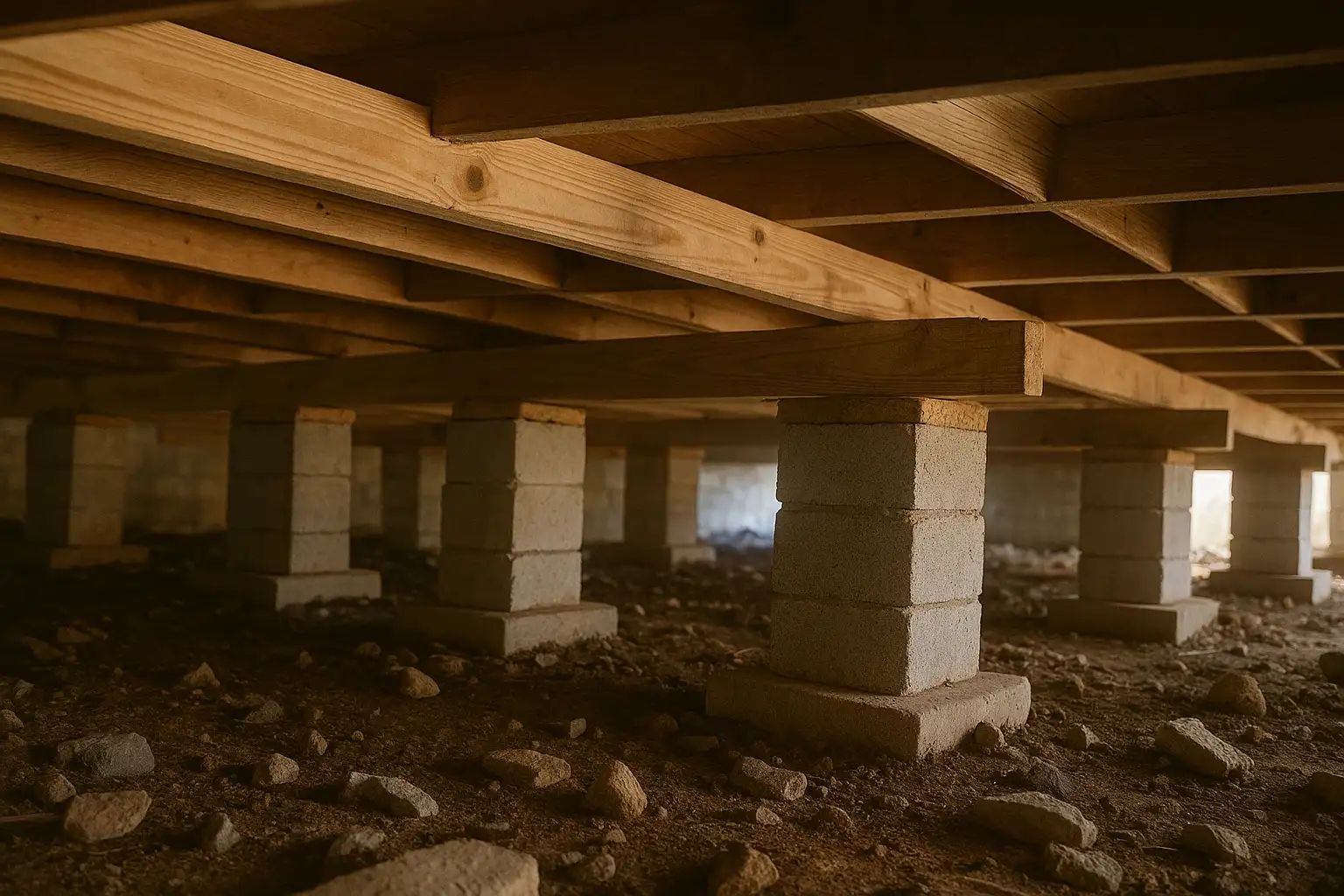
Houston's expansive Beaumont Clay soil is the leading cause of foundation problems in the region. It swells when wet and shrinks when dry, moving up to two inches seasonally and putting constant stress on home foundations. This single soil characteristic explains why nearly half of all Houston-area homes experience foundation issues at some point — and why foundation repair is far more common here than in most of the country.
If you own a home anywhere in Greater Houston, understanding how clay soil behaves is the first step to protecting your foundation. Here’s what every Houston homeowner should know.
What Is Beaumont Clay?
Beaumont Clay is the dominant soil type across Harris County and most of the surrounding Houston metro area. It’s a fine-grained, highly expansive clay deposited over thousands of years across the Gulf Coastal Plain. The defining feature of this clay is its extraordinary sensitivity to moisture — it behaves almost like a sponge, absorbing water and expanding during wet periods, then releasing that water and contracting during dry ones.
This shrink-swell behavior is measured by something called the “plasticity index,” and Houston’s clay scores among the highest in the United States. For comparison, the sandy soils of much of Florida or the rocky soils of the Northeast barely move at all with moisture changes. Houston’s clay can move several inches vertically across a single season — and your foundation has to move with it, whether it’s designed to or not.
The Shrink-Swell Cycle Explained
The damage happens through repetition. Here’s the cycle that plays out under nearly every Houston home, year after year:
- During heavy rain (spring and fall): The clay absorbs enormous amounts of water and swells, pushing upward and inward against your foundation. This upward pressure is called “heaving.”
- During drought (summer): The clay dries out and shrinks, pulling away from your foundation and leaving voids beneath it. Sections of the foundation lose their support and settle downward into the gaps.
- The result: Your foundation is pushed up in some areas and dropped in others, repeatedly, across every wet-dry cycle. Over time, this differential movement cracks slabs, shifts piers, separates beams, and pulls the whole structure out of level. Learn to recognize the signs of foundation problems before the damage becomes severe.
Why It’s Worse in Houston Than Elsewhere
Several factors combine to make Houston’s clay soil especially destructive to foundations:
- Extreme weather swings. Houston routinely goes from drought to flooding within the same year. The 2011 drought followed by years of heavy rain, and Hurricane Harvey’s catastrophic flooding in 2017, created some of the most aggressive shrink-swell cycles the region has ever seen.
- Heavy rainfall with poor drainage. Houston’s flat topography means water doesn’t drain away quickly. It pools near foundations, keeping the clay saturated and unstable for longer periods.
- Prolonged summer droughts. Texas summers bake the clay hard and dry, causing dramatic contraction and sudden settlement — often the point at which homeowners first notice cracks.
- Mature tree roots. Houston’s large live oaks and water oaks draw enormous amounts of moisture from the soil during dry spells, accelerating clay shrinkage directly beneath and beside foundations.
Worried your foundation is already shifting?
Get a free, no-obligation inspection from a Houston clay-soil specialist — full written report, usually within 48 hours.
Schedule Free Inspection →Which Houston Areas Are Most Affected?
While clay soil affects the entire region, some areas face higher risk based on their specific soil composition and drainage:
- Pasadena and the Ship Channel corridor — high humidity and complex industrial drainage keep soil moisture elevated
- Pearland and Friendswood — flat terrain with poor drainage and Clear Creek flood exposure
- Humble and the Lake Houston area — very high flood risk and moisture-retentive soils
- Sugar Land and Missouri City — former farmland with deep, compacted clay deposits
- Richmond and Rosenberg — deep Brazos River alluvial clay
That said, no Houston-area home is immune. Even areas with somewhat better-draining soil, like The Woodlands and Tomball, still experience clay-driven movement.
How to Protect Your Foundation from Clay Soil Damage
You can’t change Houston’s soil, but you can manage how it affects your home. The single most important principle is moisture consistency — keeping the soil around your foundation at a stable moisture level year-round, rather than letting it swing between saturated and bone-dry.
- Water your foundation during droughts. This sounds counterintuitive, but maintaining even soil moisture during dry spells prevents the dramatic contraction that causes settlement. A soaker hose placed 12–18 inches from the foundation, run on a consistent schedule during dry months, makes a real difference.
- Ensure proper drainage. Gutters, downspouts, and grading should move water away from your foundation, not toward it. Standing water near the foundation is one of the most common and most fixable causes of foundation problems.
- Manage trees and roots. Keep large trees an appropriate distance from your foundation, and consider root barriers if mature trees are already close.
- Fix plumbing leaks promptly. A slow leak under a slab saturates the clay locally, causing isolated heaving or settlement. Our under-slab tunneling service addresses slab leaks without breaking your floors.
- Get periodic inspections. Because clay damage is gradual, catching it early saves significantly. A free foundation inspection gives you a baseline and flags small issues before they become major.
When to Call a Professional
If you’re already seeing cracks in walls, sticking doors, uneven floors, or gaps opening between walls and ceilings, the clay has already moved your foundation enough to cause structural stress. At that point, moisture management alone won’t reverse the damage — you need professional foundation repair in Houston to stabilize the foundation and restore it to level.
FNF Foundation Repair specializes in Houston’s clay soil conditions. Whether your home needs pier and beam repair, slab repair, or house leveling, our local team understands exactly how Beaumont Clay behaves and how to build a repair that lasts.
Schedule your free foundation inspection today → or call (713) 560-5843.