
Most Houston homes built before 1980 use pier and beam foundations with a crawl space, while homes built after 1980 typically sit on concrete slabs poured directly on the ground. Each foundation type has distinct advantages, warning signs, and repair needs. Knowing which one your home has helps you understand what to watch for and how problems are fixed.
What Is a Pier & Beam Foundation?
A pier and beam foundation supports your home on a network of vertical piers — historically wood, now often concrete or steel — that hold up horizontal beams running beneath your floors. This creates a crawl space between the ground and the underside of your home, typically 18 inches to several feet high.
Advantages of pier and beam:
- Easy access to plumbing, electrical, and HVAC beneath the home
- Better ventilation, which suits Houston’s humidity
- Some flexibility to move with soil shifts
- Repairs can often be done from the crawl space without disturbing your living space
Common in: Older Houston neighborhoods — Pasadena, the Heights, Montrose, Garden Oaks, and most homes built before 1980 across Humble, Baytown, and older sections of Spring.
What Is a Slab Foundation?
A concrete slab foundation is a single, thick layer of reinforced concrete poured directly onto prepared soil. Your home sits directly on this slab with no crawl space beneath. Most slabs in Houston are “post-tension” slabs, reinforced with steel cables to handle the area’s expansive clay.
Advantages of slab:
- Lower construction cost
- No crawl space means fewer pest and moisture entry points
- Solid, stable feel underfoot
- Faster to build
Common in: Homes built after 1980 across most of Greater Houston, especially master-planned communities in Katy, Cypress, Sugar Land, Missouri City, and Fresno.
How to Tell Which Foundation You Have
Several quick checks reveal your foundation type:
- Check for a crawl space. If there’s a gap between the ground and your floor — often with vents around the home’s perimeter, or an access hatch in a closet floor or exterior wall — you have pier and beam. If your home sits flush with the ground with no gap, it’s slab.
- Listen to your floors. Pier and beam floors often have a slight hollow sound or subtle give when you walk. Slab floors feel completely solid and silent.
- Check the age of the home. Built before 1980? Likely pier and beam. Built after? Likely slab. (There are exceptions, especially in custom homes.)
- Look at the exterior base. Pier and beam homes often have a “skirting” of brick or lattice around the crawl space. Slab homes show the concrete edge of the slab at ground level.
If you’re still unsure, a free foundation inspection confirms your foundation type definitively.
Not sure which foundation your home has?
Our inspector confirms your foundation type and its condition during a free, no-obligation visit.
Schedule Free Inspection →Warning Signs — How They Differ
While both foundation types share many warning signs, some are specific to each:
Pier & beam warning signs:
- Bouncy, soft, or sagging floors
- A musty smell from the crawl space
- Visible sagging or tilting of piers or beams (if you inspect the crawl space)
- Squeaking or shifting floors
Slab warning signs:
- Cracks in the floor itself (tile, hardwood, or the slab)
- Doors and windows sticking across the whole house at once
- Cracks radiating from door and window corners
- A section of the home visibly lower than the rest
How Repairs Differ
Pier & beam repair is performed primarily from the crawl space. Pier and beam foundation repair involves replacing or reinforcing piers, sistering or replacing beams, addressing moisture, and correcting drainage. Because the work happens beneath the home, your living space usually stays undisturbed.
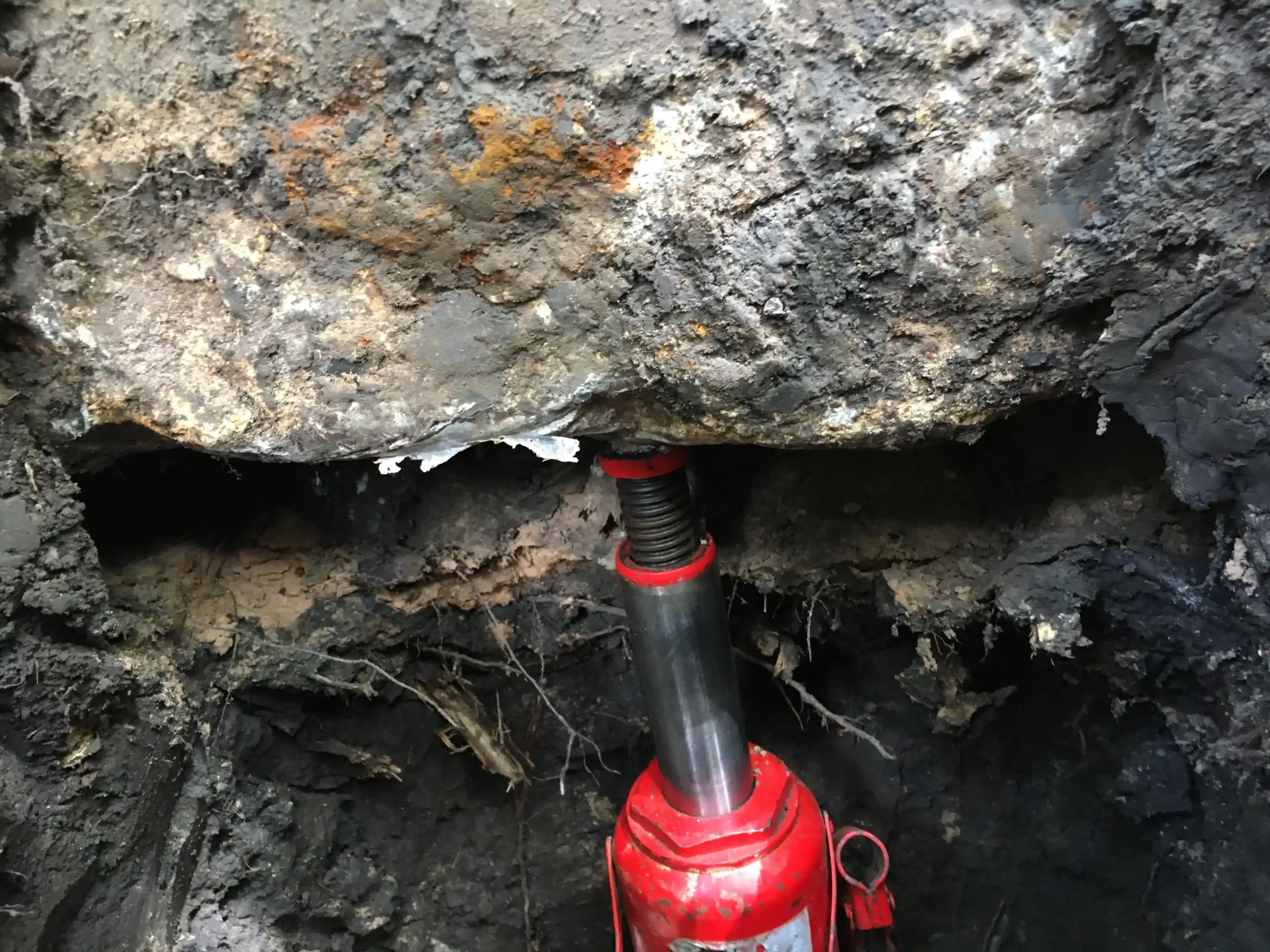
Slab repair typically involves installing piers beneath the slab to lift and stabilize settled areas, injecting polyurethane foam to fill voids, and sealing cracks. Concrete slab repair is often performed from the perimeter, and when access beneath the slab is needed, under-slab tunneling avoids breaking through your floors.
Both types may also need house leveling if the foundation has settled significantly out of level.
Which Is Better for Houston?
Neither is universally “better” — both work well in Houston when properly built and maintained. Modern post-tension slabs are engineered specifically for expansive clay and perform well. Pier and beam offers easier access and adaptability. What matters most is not the foundation type but whether it’s properly maintained and repaired when issues arise.
The key for any Houston homeowner is recognizing problems early, regardless of foundation type, and getting a professional assessment. FNF Foundation Repair repairs both pier and beam and slab foundations across Greater Houston.
Schedule your free foundation inspection → or call (713) 560-5843.